Two California users of Perplexity’s Comet web browser filed a proposed class action against Perplexity AI on Nov. 27, 2026, alleging the browser kept sending the full address of every page they visited to the company after they switched off its browsing-history setting. The Perplexity Comet lawsuit was filed in federal court in San Francisco by Edelson PC.
The 27-page complaint, Libiran v. Perplexity AI, Inc., No. 3:26-cv-14933, brings five claims under federal and California privacy law. None of the claims has been proven, and the court has not ruled on anything in the case.
The proposed classes are limited. The suit is brought only for people who found one specific toggle in Comet’s settings, turned it off, and then browsed without opening the browser’s AI Assistant.
The setting at the center of the case
According to the complaint, Comet’s Privacy and Security settings contain a toggle that Perplexity describes as controlling whether Comet may “access your browser history, navigate the web, and interact with sites.” The complaint calls it the Browsing History Access Setting and says it is switched on by default.
Directly beneath that toggle, the complaint says, Perplexity tells users their data “stays on your device by default” and that Comet sends data to Perplexity “only when necessary to complete your request.” The plaintiffs say they read those lines and turned the toggle off.
The complaint alleges that doing so changed nothing. With the toggle off and the AI Assistant never opened, it says, Comet continued to transmit the full URL of each page to Perplexity’s servers, including any search terms and referral strings contained in the address.
How the complaint says the data moves
That allegation rests on a technical description of the browser. Comet is built on Chromium, the open-source engine behind Google Chrome and Microsoft Edge, and the complaint says the engine itself sends no copy of a user’s browsing to the browser’s developer.
The transfer, the plaintiffs allege, comes from a bundle of at least three extensions that install automatically with Comet. One, which the complaint names the Orchestrator Extension, is said to run from the moment the browser opens and to watch the active tab.
When the user loads a new page, the complaint says, that extension passes the address to a second one, the Sidecar Extension, which sends it to Perplexity in a request to an endpoint at perplexity.ai/rest/autosuggest/list-autosuggest. Each request allegedly carries a “device-id” and a “visitor-id” assigned by Perplexity.
The complaint concedes the request appears to have a product purpose: preparing suggested prompts, such as “Summarize this article,” for the Assistant’s side panel. Its objection is timing. The request is triggered by the page loading, the plaintiffs allege, not by anyone asking for a suggestion.
What Perplexity told users in an archived FAQ
The complaint quotes Perplexity as saying Comet is “designed with privacy and user control at its core.” We checked that wording against an Internet Archive copy of Perplexity’s “Comet Data Privacy & Security FAQ’s” page captured on Feb. 12, 2026. The sentence appears there word for word.
The same archived page contains a statement the complaint does not quote: “By default, all Comet data is stored on your device only.” It adds that Comet does not send personal data to Perplexity until the user asks what the page calls a “personal search.”
The archived FAQ also says browsing data “may be used when needed” to fulfill searches and agentic actions and to “provide and improve your Comet experience.”
The page refers readers to a separate Comet Privacy Notice. Perplexity’s live site refused our automated requests on Nov. 29, so we could not compare the archived page with the current one or read that notice.
The February capture falls inside the period the complaint describes. One plaintiff says he installed Comet and turned the toggle off in or around February 2026; the other says she did so in or around April 2026. Both say they used personal laptops and did not open the AI Assistant.
Claims, classes and damages
The complaint proposes a nationwide class of people in the United States who disabled the setting and then used Comet to visit web pages without opening the AI Assistant, plus a subclass of California residents. It gives no headcount, saying only that “many thousands” of Comet users fit the definitions.
| Count | Law cited | Brought for | Money sought |
|---|---|---|---|
| 1 | Electronic Communications Privacy Act, 18 U.S.C. § 2510 et seq. | Nationwide class | Actual damages and profits, or statutory damages; punitive damages |
| 2 | Intrusion upon seclusion (California common law) | California subclass | Damages |
| 3 | Privacy right, California Constitution | California subclass | Damages |
| 4 | Cal. Penal Code § 631(a) | California subclass | $5,000 per violation |
| 5 | Cal. Penal Code § 632(a) | California subclass | $5,000 per violation |
For the federal count, the complaint points to 18 U.S.C. § 2520(c)(2) without stating a figure. That provision lets a court award the greater of actual damages plus the violator’s profits, or statutory damages of “$100 a day for each day of violation or $10,000,” whichever is greater.
The complaint does not total its demand or estimate how many violations occurred. It states only that the amount in controversy exceeds $5,000,000, the threshold for federal jurisdiction under the Class Action Fairness Act.
Beyond money, the plaintiffs ask for an injunction requiring Perplexity to stop transmitting Comet users’ browsing activity after the setting is disabled and to delete the data already collected. They also demand a jury trial.
What the filing leaves open
Several points are asserted rather than documented in the complaint. It does not say how the transmissions were observed, which versions of Comet were examined, or when the settings screenshot it reproduces was taken.
It also does not allege what Perplexity did with the addresses once received. The complaint says such data “can be used” to build profiles and to train and tune models, but it describes those as possible uses of data held by an AI company, not as things it claims Perplexity did.
Where the case stands
The case was assigned to Magistrate Judge Joseph C. Spero, and the parties have until Dec. 11, 2026, to consent to or decline a magistrate judge, according to the docket.
As of Nov. 29, the CourtListener docket feed showed only filings dated Nov. 27: the complaint, a proposed summons, the plaintiffs’ certificate of interested entities and the assignment notice. It listed no appearance or response from Perplexity, and we found no public statement from the company about the suit in the coverage we reviewed.
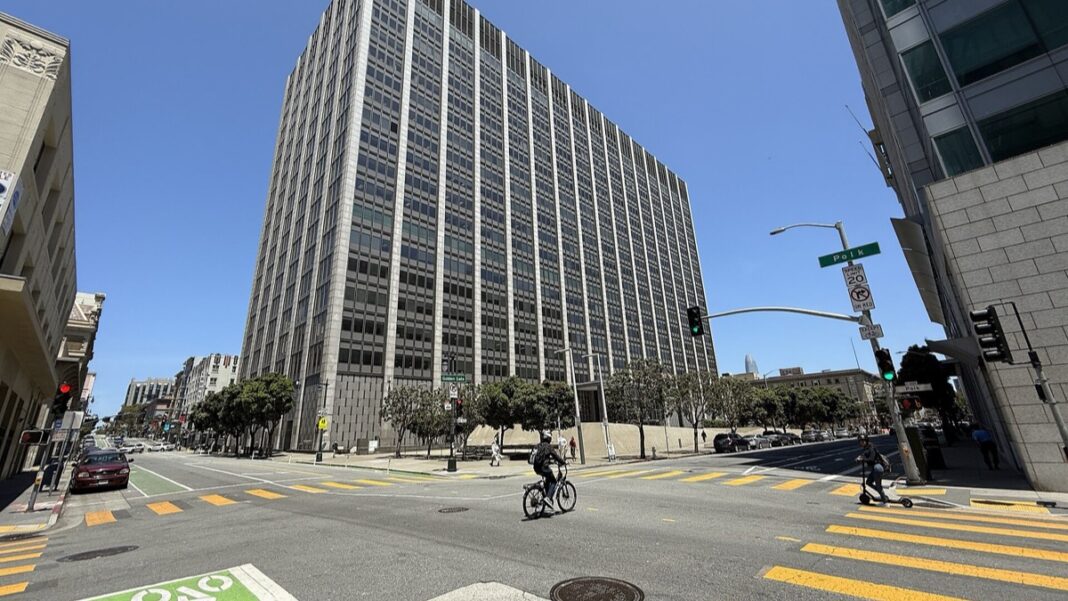
Featured image: The Phillip Burton Federal Building and U.S. Courthouse in San Francisco, home of the federal court where the suit was filed, in June 2025. Photo: Marincyclist / Wikimedia Commons (CC BY-SA 4.0)

