A former Palo Alto Networks systems engineer and his mother sued the cybersecurity company and its chief executive, Nikesh Arora, in federal court in San Jose on Nov. 19, 2026. The complaint says the company presented AI attack-simulation work he built on his own time as the work of its Unit 42 team.
Robert Ringer and Patricia Ringer filed the 37-page complaint in the U.S. District Court for the Northern District of California, case No. 5:26-cv-14195. It lists 15 counts, from removal of copyright information under federal law to trade secret misappropriation and unauthorized computer access. None of the claims has been proven.
At its center, the Palo Alto Networks lawsuit asks who owns a set of AI security tools, and whether an arbitrator or a federal judge should decide.
What the complaint says happened
According to the filing, Palo Alto Networks employed Robert Ringer from April 1, 2019, through July 2, 2025. He was hired as a Systems Engineer paid under the company’s sales compensation plan and later held the title Enterprise Principal Architect. The complaint describes the job as “customer-facing technical sales support, not product development”.
The complaint relies on that distinction. It says he wrote two open-source projects, AutoPWN9000 and SaaS-Squash, on his own time and equipment. It says a third program, which it calls the “Family Software,” belongs solely to Patricia Ringer, who it says never worked for the company or signed any agreement with it.
The filing says that on or about March 22, 2024, Ringer asked his manager for $5,000 and time to explore AI-based offensive security research. The manager declined because Ringer was in sales, the complaint says, and told him he could do it himself.
The complaint says Ringer showed the framework to company leadership in December 2024 and, at the company’s request, demonstrated it at the RSA Conference in April 2025 on his own laptop, “while making clear it was his own work”.
The earnings call and the firing
The attribution claims center on May 2025. The complaint says that on the company’s May 20, 2025, earnings call, Arora told investors that Unit 42 was able to “simulate an entire ransomware attack in under 25 minutes” using AI. It says Arora repeated the Unit 42 attribution on CNBC and Mad Money.
Ringer raised the issue with his manager, the ethics team and the company’s intellectual-property lawyers beginning around May 23, 2025, the filing says. On July 1, 2025, he emailed Arora directly. The complaint says the company fired him the next day, “citing his claim to own the intellectual property at issue.”
The plaintiffs say they cite the firing, and Senate testimony by Unit 42 leadership, only as background and seek no relief for either.
The arbitration fight
The suit is tied to an arbitration the company started. On Aug. 11, 2025, Palo Alto Networks filed a demand for arbitration with JAMS seeking a declaration that it owns copyrights and patent rights in the works. The complaint says the demand also seeks an order compelling Ringer “to assign to PAN all rights, title, and interest” in them.
On June 11, 2026, the arbitrator found the company’s claims arbitrable as between the company and Ringer, according to the complaint. The new suit argues that ownership under the Copyright Act belongs in federal court, and that no arbitrator can decide the rights of Patricia Ringer, who never agreed to arbitrate.
The plaintiffs ask the court to bar the company from obtaining any ownership ruling in the arbitration while the case is pending. They say the company’s other arbitration claims could go forward.
Claims about home computers
The complaint also alleges that company software stayed on Ringer’s personal systems after he left. It says Cortex XDR agents and an XSOAR engine remained installed on his home-lab servers. On July 12, 2025, the engine “remained loaded, enabled, and running,” the filing says.
Ringer demanded in writing on July 9, 2025, that all access stop, according to the complaint. It says the company’s lawyer answered that the company “likely disputes” his description of those resources and did not confirm that access had ended.
What Palo Alto Networks’ own posts said
We reviewed two 2025 Palo Alto Networks blog posts that use the 25-minute figure. Neither names Ringer, and the earlier one was published before the April 2025 RSA Conference demonstration described in the complaint.
| Date | Event | Source |
|---|---|---|
| Feb. 25, 2025 | Unit 42 blog says AI-assisted attacks could cut time to exfiltration to 25 minutes in a controlled experiment | Palo Alto Networks blog |
| April 2025 | Ringer demonstrates the framework at the RSA Conference | Complaint |
| May 14, 2025 | Blog post titled “Unit 42 Develops Agentic AI Attack Framework” | Palo Alto Networks blog |
| May 20, 2025 | Earnings call where the complaint says Arora credited Unit 42 | Complaint |
| July 2, 2025 | Ringer’s employment ends | Complaint |
| Aug. 11, 2025 | Company files JAMS arbitration demand | Complaint |
| Nov. 19, 2026 | Ringers file suit in San Jose | Docket |
The May 14 post, by Sam Rubin, says Unit 42 “has been researching and developing an Agentic AI Attack framework”. The text we checked does not mention Ringer, AutoPWN9000 or the RSA Conference. The complaint refers to “a blog post by a Unit 42 executive” but does not say which one.
What GitHub shows
The complaint says “TechRinger” is the name of Ringer’s GitHub account. On that account, the public autoPWN9000 repository lists a creation date of Aug. 8, 2024, an MIT license and a last update on July 3, 2025.
The SaaS-Squash repository carries a GPL-3.0 license. That matches the complaint’s statement that the tool is derived from a GPL-licensed project. GitHub lists the current repository as created July 3, 2025. Those dates cover only the repository online now. The complaint says the company referenced SaaS-Squash on that account in March 2024.
What the Ringers are asking for
The plaintiffs want declarations that Robert Ringer owns the copyrights in his contributions and that they are not works made for hire. They also ask the court to declare that Patricia Ringer alone owns the Family Software.
They seek actual or statutory damages under the Copyright Act, trade secret damages, and at least $1,000 in statutory damages on a stored-communications claim. The complaint does not state a total dollar figure. Arora is named only in the copyright-information count and part of the unfair competition claim.
As of Nov. 20, the public docket showed three entries, all filed by the plaintiffs on Nov. 19, and no response from either defendant. Hackler Flynn & Associates attorney Maryam Maleki represents the Ringers.
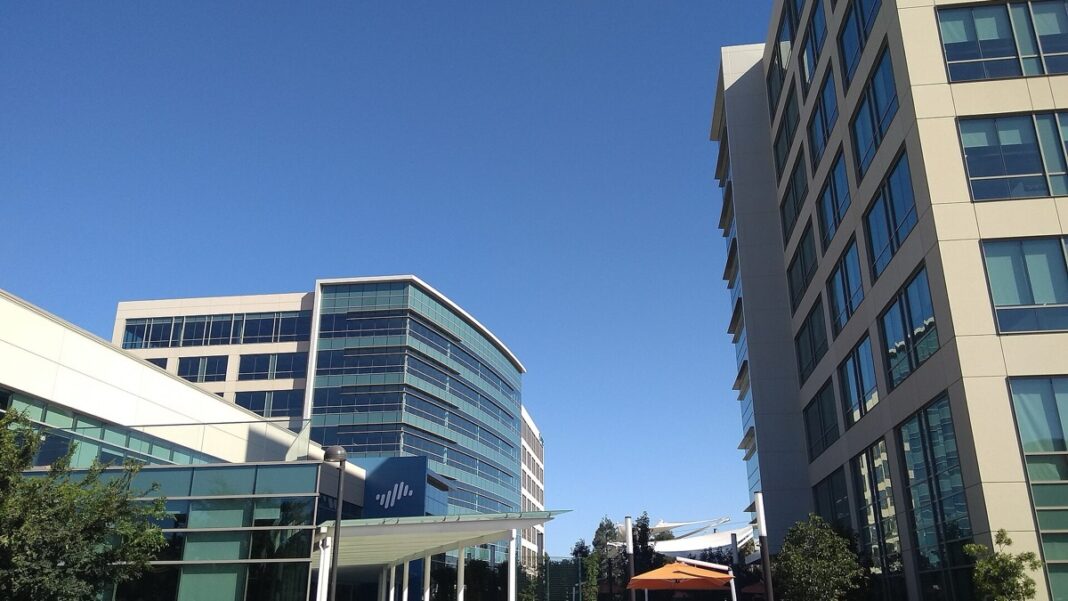
Featured image: Palo Alto Networks headquarters in Santa Clara, California, in 2018 (file photo). Photo: Namaste jinx / Wikimedia Commons (CC BY-SA 4.0)

