A federal appeals court has rejected the copyright case over Mary J. Blige’s 1992 hit “Real Love,” ruling on Nov. 23, 2026, that the song is not substantially similar to the 1973 funk track “Impeach the President.” The decision leaves in place a 2025 dismissal that ended the case at the pleading stage.
The U.S. Court of Appeals for the Second Circuit issued the ruling as a 10-page summary order in case No. 25-2380-cv. Blige herself was never a defendant. The Mary J. Blige Real Love lawsuit was brought by TufAmerica Inc., which does business as Tuff City Records, against the song’s music publisher.
That publisher is Songs of Universal, Inc., which the order says replaced Universal Music Publishing, Inc. in the case by agreement of both sides. The distinction matters, because the dispute was only ever about the written composition of “Real Love,” not the recording that listeners hear.
What the three judges decided
The panel was Chief Judge Raymond J. Lohier Jr. and Circuit Judges Barrington D. Parker and Myrna Pérez. They started from a point that was not contested: the order says the publisher “does not dispute that actual copying occurred,” so the court assumed it did.
Copying alone does not make a copyright case, though. Tuff City also had to show that the two works are substantially similar in their protected expression, and the judges said it had not. They wrote that the songs share certain percussive elements, but that “other elements are notably different.”
The order names those differences: “open versus closed hi-hats” and distinct snare and kick drum rhythms. It then steps back to the songs as a whole. The older track is sung by a male group with call-and-response vocals, horns and guitars. “Real Love” is sung by a woman and driven by piano and percussion.
“The works as a whole are distinct,” the judges concluded, citing differences in lyrics, melody, genre, subject matter and overall sound. They leaned on the court’s own 2024 decision in a case over Ed Sheeran’s “Thinking Out Loud,” which held that basic building blocks such as rhythms are generally not copyrightable.
Five arguments, five losses
The similarity finding is only part of the order. It deals with five separate points Tuff City raised or dropped, and two were lost on procedure rather than on the music. We read the order and listed each one below.
| Issue on appeal | Result | Court’s reason |
|---|---|---|
| Songs are substantially similar | Rejected | Shared drum elements are not enough; works are distinct overall |
| Wrong legal test was used | Forfeited | Not raised in the district court |
| Declaratory and injunctive claims | Abandoned | Not contested on appeal |
| Sealing of a settlement agreement | Forfeited / affirmed | Tuff City did not oppose the sealing motions below |
| Chance to file a new complaint | Rejected | No showing that a new version could fix the problem |
The sealed document is the unusual part of this case. According to a district court order from April 2025, it is a settlement agreement between Tuff City and UMG Recordings, Inc., which was not a party to the suit. The payment terms and the amount are redacted in the public versions.
Tuff City’s original complaint pointed to that deal directly. It alleged that the company had reached an agreement with UMG Recordings over the sample on the “Real Love” master recording, and that the publishing side’s refusal to negotiate was “difficult to reconcile” with it. Those were allegations, and none of the claims was proven before the case was dismissed.
A question the court left open
That split between recording and composition is where the order stops short. Tuff City argued that its copyright in the sound recording of “Impeach the President” should define or widen its rights in the composition. In a footnote, the judges said they “need not resolve that question.”
Their reason was narrow. The amended complaint alleged infringement of the composition only, and the court found the two compositions were not substantially similar. The panel wrote that it expressed no view on whether the two copyrights give the same protection.
The order also carries a limit printed on its first page: rulings by summary order “do not have precedential effect.”
How small the disputed drum part was
One detail the appeals court did not repeat sits in U.S. District Judge Dale E. Ho’s Sept. 23, 2025 opinion. Ho wrote that the two segments Tuff City compared each amounted to less than one second of the respective compositions.
He set that against a track the defense measured at 3 minutes and 58.561 seconds, and noted Tuff City did not dispute the point. Any such copying, he found, was “de minimis,” a legal term for too small to count. His shorter summary: “The songs do not sound the same.”
Both courts described the same chain of sampling. Tuff City alleged that “Real Love” took its drum sounds from “Top Billin’,” a 1987 hip-hop track by Audio Two, which had in turn sampled the Honey Drippers’ “Impeach the President.”
The case by the dates
The court records give a clear timeline, and we counted the days between key filings ourselves.
| Date | Event |
|---|---|
| Feb. 13, 2024 | Tuff City sends a cease-and-desist demand, per its complaint |
| April 4, 2024 | Complaint filed in the Southern District of New York |
| Sept. 23, 2025 | Judge Ho dismisses the case with prejudice |
| Sept. 29, 2025 | Tuff City files its notice of appeal |
| Oct. 19, 2026 | Second Circuit panel hears the case |
| Nov. 23, 2026 | Summary order affirms the dismissal |
From filing to the appellate ruling is 963 days, counting from April 4, 2024, to Nov. 23, 2026. The panel ruled 35 days after hearing the case. The complaint had asked for actual damages and profits or, alternatively, statutory damages of up to $150,000.
Legal fees are the next open item
What remains in the district court is the question of legal fees. The district court docket shows the Universal defendants asked in October 2025 for more time to file a motion for attorneys’ fees and costs. On Oct. 14, 2025, Judge Ho deferred that question until the appeal was resolved.
His order directs both sides to file a status letter within seven days after the Second Circuit issues its mandate, with a proposed briefing schedule on fees “if necessary.” No fee amount appears in the docket entries we reviewed, and no fee award has been made.
Tuff City has signaled it is not finished. Its lawyer, Hillel I. Parness, told Rolling Stone the company “will be seeking further judicial review.” As of Nov. 27, the summary order was the most recent entry on the CourtListener copy of the appeals docket, which showed no rehearing petition and no mandate.
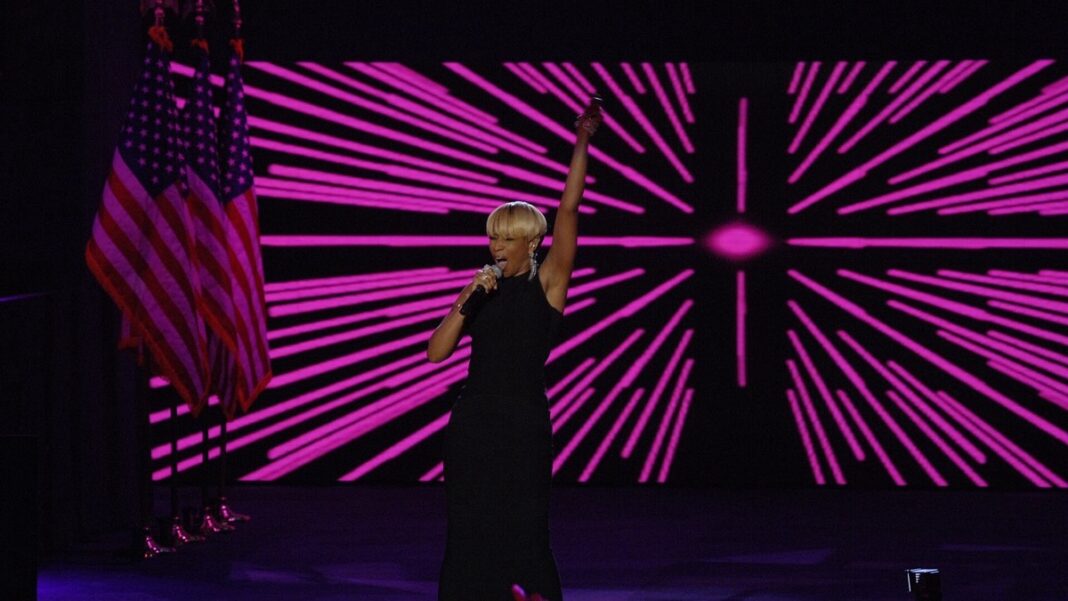
Featured image: Mary J. Blige performing in Washington in January 2009. She is not a party to the case. Photo: Donna Lou Morgan, U.S. Navy / Wikimedia Commons (public domain)

